

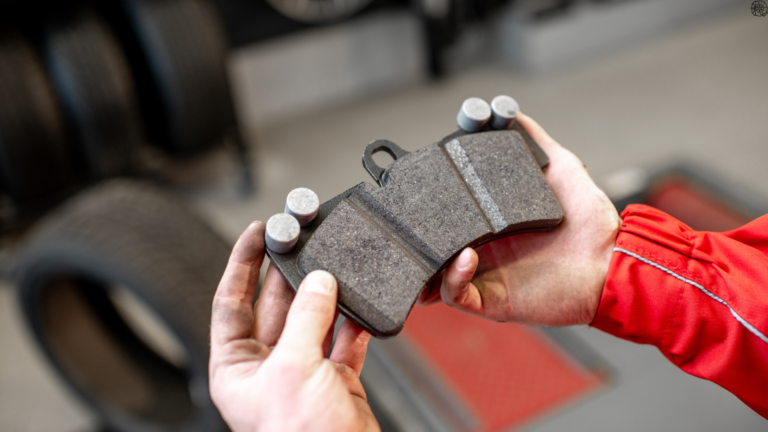
A lot of drivers have never watched a brake job. With a shop, you drop the car off and pick it up later. With mobile brake repair, the work happens right in your driveway or parking lot, so it helps to know what to expect. Here is what happens during a brake pad replacement with Nate’s Brakes, from the moment we arrive to the test drive at the end.
Before We Arrive
It starts with a free quote. Tell us the year, make and model, what you are hearing or feeling, and which end of the car you think needs work. That lets us bring the right parts and give you an accurate price before anyone picks up a wrench. If you are not sure whether you need pads alone or pads and rotors, our guide on pads only or pads and rotors explains how to tell.
What You Need to Have Ready
- A flat, safe spot to park: a driveway, a garage or a parking space where the car can be lifted safely, with a little room around each wheel
- Access to the keys, so we can move the car, test the brakes and take it for a short drive
- A few minutes at the start and the end to go over what we find and what we did
That is it. There is no shop to drive to and no waiting room.
Step by Step: What Happens During the Job
1. A quick check before the wheels come off
We listen for noises, feel the pedal and look for warning lights on the dashboard. This confirms the symptoms you described and points us to the right axle.
2. Wheels off and a full inspection
With the car safely lifted, we take the wheels off and look at the whole brake assembly, not just the pads:
- Pads: how much material is left, and whether they wore evenly
- Rotors: measured against the minimum thickness, and checked for grooves, heat spots or uneven wear. See when to replace brake rotors.
- Calipers and slider pins: checked for sticking or leaks
- Brake hoses and fluid: checked for cracks, leaks and fluid level
3. We confirm the plan before any work starts
Once everything is measured, we tell you exactly what we found and confirm the price. If pads alone will do the job, we say so. If the rotors need replacing too, we show you why. Nothing gets replaced without your OK.
4. Old pads and hardware come out
The caliper is unbolted, the old pads come out, and we check the clips and hardware that hold the pads in place. Worn or rusted hardware is a common cause of brake noise, so it gets cleaned or replaced as needed.
5. Caliper slider pins are cleaned and greased
This is one of the most skipped steps in a rushed brake job. The caliper slides on two pins, and when the grease dries out and gums up, the caliper can stick. That leads to uneven pad wear, noise and even shaking when you brake. We clean the pins and apply fresh high-temperature grease so the caliper moves freely.

6. The hub is cleaned when rotors are replaced
If the job includes new rotors, we clean rust and buildup off the wheel hub first. A rotor sitting on a rusty hub does not sit perfectly flat, and that small wobble is enough to bring the vibration right back.

7. New pads (and rotors, if needed) go on
The new pads go in with their hardware, the caliper is bolted back on, and the wheels are reinstalled and tightened to the correct torque. Brakes are always done in pairs on the same axle, so both sides stop evenly.
8. Pedal check, fluid check and a test drive
Before driving, we pump the brake pedal until it is firm, since the pistons need to move back out against the new pads. We check the brake fluid level, then take the car for a short test drive to make sure it stops straight, quietly and smoothly.
How Long Does It Take?
Every vehicle is different, so there is no single answer. A brake pad replacement takes anywhere from about 30 minutes to around two hours. A quick pads-only job on one axle is on the shorter end. Both axles, new rotors, seized bolts or heavily rusted hardware take longer. We give you a realistic time when we confirm the job.
Choosing the Right Brake Pads
There is no one best brake pad for every car. We choose pads for each vehicle based on what it is, how it is driven and what the manufacturer recommends. Here is a quick look at the common types:
| Pad type | What it is like | Often used for |
|---|---|---|
| Ceramic | Quiet, low dust, long lasting | Most daily drivers and commuter cars |
| Semi-metallic | Strong bite, handles heat well, a little more dust and noise | Trucks, SUVs, towing and heavier vehicles |
| Organic | Soft and quiet, but wears faster | Some older and lighter vehicles |
Heat matters here in Arizona, so we keep it in mind when choosing pads. Our post on how long brake pads last covers what affects pad life.
After the Job: Breaking In New Pads
New pads need a short break-in period, often called “bedding in,” so they leave an even layer of material on the rotor. For the first 100 to 200 miles:
- Brake gently and gradually where you can, and avoid hard, sudden stops when it is safe to do so
- Avoid holding the pedal down hard right after a hot stop
- Expect the brakes to feel slightly different for a day or two as the pads settle in
- Call us right away if the pedal feels soft, the car pulls to one side, or a brake warning light comes on
Why Mobile Brake Service Saves You Time
With mobile brake repair, the whole job happens where your car already is. No arranging a ride, no waiting room and no driving a car with worn brakes across town. We serve Phoenix, Mesa, Tempe, Scottsdale, Chandler, Gilbert, Glendale, Queen Creek and the rest of our service areas.
Frequently Asked Questions
Can brake pads really be replaced in a driveway or parking lot?
Yes. As long as there is a flat, safe spot where the car can be lifted, a brake pad replacement can be done on site with the same steps a shop would follow.
How long does a mobile brake pad replacement take?
Usually between about 30 minutes and two hours, depending on the vehicle, how many axles need work and whether rotors are being replaced.
Will you tell me if I need rotors before you start?
Yes. We measure the rotors with the wheels off and confirm the plan and price with you before any work begins.
What kind of brake pads do you use?
It depends on the vehicle. We match the pad type to your car, how you drive it and the manufacturer’s recommendation, rather than putting the same pad on every car.
🚗 Ready for New Brake Pads? We Will Come to You
Skip the shop and the waiting room. Book with Nate for a free quote, or call (602) 741-3529, and we will come to your home or work anywhere in the Phoenix metro. 🛠️