

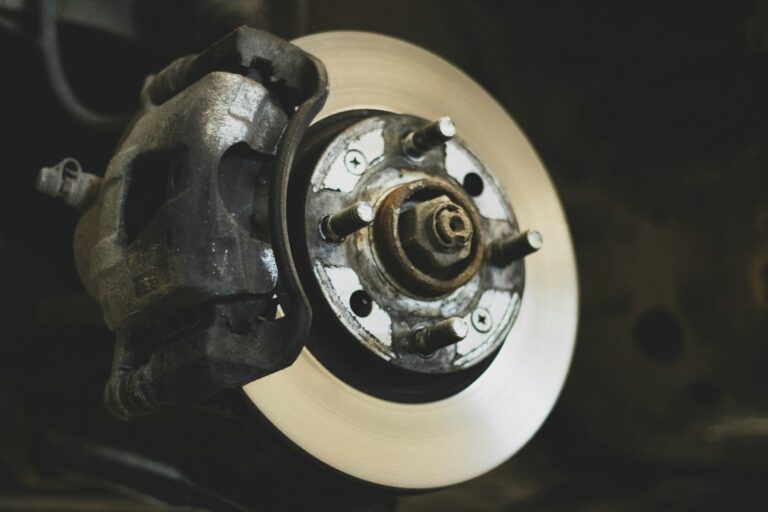
You press the brake pedal and the steering wheel starts to shimmy in your hands, or the whole car shudders as you slow down. It is one of the most common brake complaints we hear from drivers around Phoenix, and it is never something to ignore. A car shaking when braking almost always means something in the brake system, or the parts around it, is worn, uneven or loose.
Below are the six most common causes, a quick way to narrow down which one you have, and the warning signs that mean you should stop driving and have the car checked where it sits.
Where You Feel the Shake Tells You a Lot
Before getting into the causes, pay attention to where you feel the vibration and when it happens. This quick check points you in the right direction:
| What you notice | Most likely cause |
|---|---|
| Steering wheel shakes when you brake | Uneven front rotors |
| Pedal pulses or seat shudders, steering stays steady | Uneven rear rotors or drums |
| Car pulls to one side as it shakes | Sticking caliper or a collapsed brake hose |
| Vibration at highway speed, worse when braking | Tires, a bent wheel or worn suspension |
| Pedal pulses only in hard stops or on gravel | ABS working normally, usually nothing to fix |
| Shaking plus a grinding noise | Pads worn to metal, get it checked right away |
The 6 Most Common Causes of a Car Shaking When Braking
1. Uneven (“Warped”) Brake Rotors
The rotor is the metal disc your brake pads squeeze to stop the car. When it is smooth and even, braking feels smooth. Over time, rotors develop thickness variation (spots that are thinner by a few thousandths of an inch) or uneven deposits of pad material. Most people call this “warped rotors.” True warping is rare, but the effect is the same: as the rotor spins, the pads grip unevenly and you feel a pulse through the pedal or the steering wheel.
This is the number one cause of shaking when braking. Heat speeds it up, so long downhill braking, towing and stop-and-go summer traffic all take a toll. The fix is usually new rotors, or resurfacing if the rotor is still above its minimum thickness, along with new pads. Our guide on when to replace brake rotors covers the other warning signs.
2. Worn, Glazed or Contaminated Brake Pads
Pads that are worn thin, glazed from overheating, or soaked with oil or brake fluid do not grip evenly. That uneven bite can feel like a shudder, especially at lower speeds. If your pads are wearing more on one side than the other, that is a clue something else, such as a caliper, needs attention too. See signs you need new brake pads and why brake pads wear unevenly.
3. A Sticking Brake Caliper
The caliper is the clamp that pushes the pads against the rotor. If its piston or slide pins seize up from corrosion, old grease or a torn rubber boot, one pad can keep dragging on the rotor even when your foot is off the brake. That overheats the rotor on that wheel and causes vibration, a pull to one side, a burning smell after driving, and one wheel that is much hotter and dustier than the others.
A sticking caliper wears out pads and rotors fast, so catching it early saves money.
4. Worn Suspension or Steering Parts
Braking shifts the weight of the car forward and puts a heavy load on the front suspension. Worn tie rod ends, ball joints or control arm bushings that feel fine while cruising can let the wheel move under braking, which you feel as a shimmy in the steering wheel. Sometimes the brakes are fine and the shake is coming from the front end. A proper brake inspection should rule this out, so you do not pay for brake parts you do not need.
5. Tire and Wheel Problems
An out-of-balance tire, a wheel bent by a pothole or curb, or a tire with a separated belt can all cause a vibration that gets worse as you slow down. Lug nuts matter too: when they are tightened unevenly, the wheel can pull the rotor slightly out of true. That is one reason shaking sometimes starts soon after new tires or a rotation.
If you also feel the vibration at a steady highway speed without touching the brakes, start by having the tires checked.
6. Worn Wheel Bearings or Hub Problems
A worn wheel bearing lets the hub wobble slightly, so the rotor no longer spins perfectly straight. You may hear a humming or growling noise that changes with speed or when you turn, along with vibration under braking. Rust or debris between the hub and the rotor can cause the same wobble, which is why a good brake job includes cleaning the hub surface before new rotors go on.
Is It Just the ABS?
If the pedal pulses rapidly and you hear a buzzing or grinding from under the car only during a panic stop or on loose gravel, that is your anti-lock brakes doing their job. A pulse during normal, gentle stops on dry pavement is not ABS, and it means something needs a look.
When to Stop Driving
Stop driving and have the car checked where it is if the shaking comes with any of these signs:
- A grinding or metal-on-metal scraping noise
- The car pulling hard to one side
- A soft or spongy brake pedal, or one that sinks toward the floor (low or old brake fluid can be part of the problem)
- A burning smell or smoke coming from a wheel
- A brake warning light on the dashboard
- Shaking that gets worse quickly, or a clunk or knock when you brake
A mild, steady pulse you have had for a while, with none of the signs above, is usually not an emergency, but book a check soon. Until then, leave extra following distance, avoid hard stops and long downhill drives, and do not wait for it to get worse. Uneven rotors wear out pads faster, and a small repair can turn into a bigger one.
Why Phoenix Driving Is Hard on Rotors
Arizona conditions make shaking brakes more common than in milder climates:
- Summer heat: brakes start out hotter and take longer to cool down between stops.
- Stop-and-go freeway traffic: repeated hard stops from speed on I-10, the 101 and the 202 build up heat in the rotors.
- Long downhill grades: riding the brakes coming down I-17 from Flagstaff or SR-87 from Payson can overheat pads and rotors. Shifting to a lower gear on long descents takes much of the load off.
- Holding the pedal hard after a hot stop: clamping the pads on a very hot rotor can leave a patch of pad material behind. Once you are fully stopped, firm, steady pressure is enough.
How We Fix It at Your Home or Work
With mobile brake repair, you do not have to drive a shaking car across town to a shop. We come to your driveway or office, inspect the rotors, pads, calipers and hardware, explain what we find, and give you a quote before any work starts. We serve Phoenix, Mesa, Tempe, Scottsdale, Chandler, Gilbert, Glendale, Queen Creek and the rest of our service areas.
Frequently Asked Questions
Why does my steering wheel shake when I brake but not when I drive?
A shake that only shows up when you brake points to the brakes themselves, most often front rotors with uneven thickness. If the vibration is there all the time and just gets worse when braking, look at tires, wheels and suspension as well.
Will new brake pads stop the shaking?
Usually not on their own. If the rotors are uneven, new pads take on the same uneven contact and the shake comes back. Pads and rotors are normally replaced or serviced together.
Can my rotors be resurfaced instead of replaced?
Sometimes. A rotor can be resurfaced only if it will still be above the minimum thickness stamped on it afterward. Many modern rotors are fairly thin from the factory, so replacement is often the better long-term fix.
Is it safe to drive with a car that shakes when braking?
A mild, steady pulse is usually not an emergency, but it should be checked soon. If you notice grinding, pulling, a soft pedal, a burning smell or a warning light, stop driving and have it inspected where it is.
🚗 Feel a Shake When You Brake? Let Us Come to You
Do not drive a shaking car to a shop. Book with Nate for a free quote, or call (602) 741-3529, and we will come to your home or work anywhere in the Phoenix metro. 🛠️